Most Americans Want Some Portion of the American Dream

While the holiday marketing anIMG_0027d promotional blitz seem to go on beyond even normal tolerance for mass marketing of things needed for “the good life,” underlying tensions in American society appear to be distracting from the Holiday Season. While most of us believe we, and possibly our families, deserve some portion of the American Dream because we have worked for it, earned it, or paid for it in some matter, our attainment, or maybe our enjoyment, of the dream appears to be interrelated with the perceptions others have about the trajectories of their lives.

Yes, even if we deserve to earn more, have more, and live better than others, we can observe from the events of the 1960’s through the Ferguson conflict and beyond, that well-earned rewards are themselves tenuously connected to the overall perceptions others also harbor about their access to well-being, justice, and equity.

I certainly do not have any answers, and I believe in working hard to attain a good life for my family and future generations. Yet, I cannot help but notice that there is more crime in some communities than others, and there are income disparities and educational achievement gaps. There are many assumptions why the aforementioned exists including that it is the natural hierarchy of things. However, I do wonder how wide hierarchical differences can be in the overall society and in specific communities before they begin to threaten our overall sense of well-being in America? Is there a tipping point when pockets of crime, disparities, and education gone awry begin to unravel significant portions of our communities? I certainly do not know. However, we can note that there are already cities that industries avoid, communities where unemployment is stagnant, and communities where youth are filled with an overall sense of dread and hopelessness.

Possibly this Holiday Season is a good time to think about what changes we need to discuss or pursue in 2015.

Happy Holidays!

The Holiday Season–A Time to Give Thanks for our “Presents”

UnknownNow, that we have survived election season and have gone directly into the Holiday Season, we can tip this time of mass marketing of purchasing to our advantage by employing the celebratory mood to give thanks to those who have helped us on our journeys–especially our parents, grandparents, and other significant family members.

If we can move pass the stresses of gifts, parties, and awkward moments with relatives, we can seize the Holiday Season as an opportunity to slow down a bit and to extend our circle of interactions to thank those who have helped us develop our values, moral compasses, and foundations that guide and gird us through our education, careers, raising families, and the time when we ourselves strive to pass on legacies.

I join many Baby-Boomers in attending one too many funerals of parents of my friends.  As I listen to those who recount the lives of these parents, it became clearer than ever that we owe so much to the generation born in the 1920s and 1930s. They were those in our families who weathered wars, economic depressions, and the unrelenting Industrial Age.  It is interesting to note that this generation is often called the “Silent Generation,” or the “Traditional Generation,” yet, their legacies speak for themselves.

Our parents and their parents worked long, hard hours, often without complaining, paid cash before credit cards became the norm, sacrificed dreams and luxuries for their children, and believed that the future would be better –if they just did their parts in small ways.

Although they were born before it was possible to take “selfies” with cell phones,  the unrelenting hopes and legacies of love that our parents and grandparents left us can be recounted in detail by some of us.  There were parents who worked two jobs to help make possible college educations for their “Baby Boomer” children.  There were parents and grandparents who were wounded in wars while fighting courageously for our rights to pursue our American Dreams.  There were uncles and aunts who passed from our lives unheralded, but who also labored for us, and guided us, in quiet, but dignified ways.

This Holiday Season, as we carve turkeys and pass around the sides, I hope we take a moment to give thanks to those who left us these foundational legacies of hope and love.  As we pay our respects to their legacies, we cannot help but thank them for believing in the possibilities of  our country, for returning to their farms to feed a nation, for bearing the indignities that only humans can inflict upon each other because of racial and class differences.  Most of all, I hope we thank them for stubbornly clinging to the belief that their sacrifices would lead to a better America for their children.

As we know,  the Silent Generation had their personal  and cultural struggles, and they gave birth to the more vocal and dramatic Baby Boomers who helped America evolve into a more diverse and future-oriented nation.  As a member of the Baby Boomers generation,  I hope that Generation X and the Millennial Generation will advance positive social action, embrace the sacrifices they will face to advance and sustain the ideals of our nation, and pay it forward to the next generations of leaders.

When you think of the “presents” we have already been given, the Holiday Season can truly be a time of celebrations!

Election Day–Voting is Fundamental

american-flag-sunset-1Some of our fellow citizens have already taken the opportunity to vote in early elections.   The fact that they have voted is good for America.

November 4, when most people, who will vote, will go to the polls is a very important day for the citizens of this country. I would not presume to give advice on any specific candidate or any specific race.   However, I do note that it is becoming increasingly difficult to discern political platforms amidst the negative attack advertisements on television and at political fund raising events. It is more important than ever before to get beyond the 30 second sound bites, that often cater to fears and stereotypes and to “do our homework” about each candidate before completing your responsibility to ensure our American legacy.

As I hear people talk about the candidates’ promises and the records of incumbent legislators, it seems that many citizens correlate being political with being dishonest and serving the interest of specific constituencies who help/helped them get elected. Thus, they do not pay much attention to the actual platforms, records, agendas, and promises of the candidates. This is not good for us as citizens.

As citizens, it is my opinion, that it is our responsibility to vote for candidates who will exemplify our core values and improve the quality of life for us and for our children. Thus, it is important to review the work of candidates on a daily basis, so that we can make the most intelligent decisions possible when we go to the polls.   It is very important, also in my opinion, for us to push pass the emotionally charged words and half-truths, so that we will not be surprised about results we will experience in employment trends, educational funding, environmental sustainability, or social security changes (and so forth) when the candidates actually take office and move forth on their agendas.

As stated by Abraham Lincoln on November 19, 1863, it is our responsibility each day to ensure “that this nation… shall have a new birth of freedom–and that government of the people, by the people, for the people, shall not perish from the earth.”

Voting is fundamental in maintaining America.


Smooth Leadership Successions Support Solid Legacies

616231ee945f90ab44cc9eb3f8e8f724

Admittedly, I have had a career primarily in higher education, so these reflections will focus on higher education, but the need for smooth leadership succession is essential, and some of these reflections can be applied in other industries, nonprofits, and community groups.

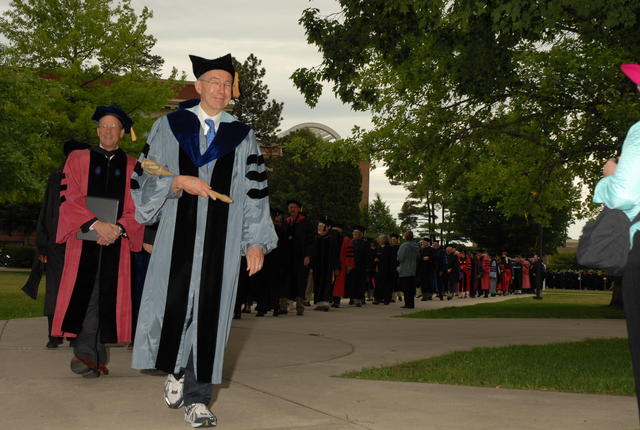
Recently, I had the pleasure of attending two inaugurations of college presidents. At each inauguration a woman was invested with the power to lead the institution. Both of these women are knowledgeable, dynamic, resourceful, charismatic, strategic, and well-prepared leaders. I know this to be true because I have known one of them for twenty years and the other for ten years. Thus, I am confident that both of these women college presidents will demonstrate good judgment, intellectual nimbleness, and courage that will help their individual universities continue to pursue stated strategic directions in higher education.

If presidential selections go well, an institution of over 150 years may be inaugurating its 10th, 11th, or 12th leader as president. Moreover, in academia, inaugurations are festive, formal, and historic events in the lives of colleges or universities. Inaugurations of college presidents are usually characterized by dignified and formal processions into and out of large auditoriums that include faculty, students, legislators, alumni, and others who are stakeholders in the success of the institution. If you attend an inauguration, it will be hard to overlook that the participants are wearing long, formal regalia, and somewhat medieval gowns signifying their academic specializations. These gowns are usually referred to as academic regalia, and they are distinguishable by their range of colors, hoods, and velvet hats.

If you have an opportunity to attend an inauguration, you will see well wishers and speakers from various stages of the incoming president’s life to inform, and ensure to those in attendance that the institution has indeed made a wise choice in leadership. What I noted about both of these inaugurations was the support of past presidents and past leaders (trustees, alumni, legislators) who have been associated with the institutions at different times during its history. They attend the inauguration to lend their support to the incoming leader. The incoming leader, in turn, builds on the legacy of those who she follows–like a runner in a relay race.

At one of the inaugurations, there were three former presidents who represented about 25 years of the leadership history of the institution. To have these past presidents literally stand with the new president during this transition of power to mentor and lend moral support, exemplified the legacy of the institution. The determination of past leaders to support and solidify the incoming president’s success serves to further strengthen the institution for future growth, innovation, and challenges.

It is not much of a leap to notice that not many industries engage in such ceremonies when announcing and anointing its leadership change. This show of leadership continuity, the “passing of the torch” from one leader to another, is reassuring in a time of uncertainty, shorter tenures of leaders, fiscal challenges, and predictions about the future of higher education. It did occur to me that institutions are most fragile during times of transition. Wall Street often reacts to changes in leadership and stocks rise or fall dramatically because of the assumed competence of new leaders.

One cannot help but infer that the pomp and circumstance surrounding inaugurations is helpful in also stabilizing leadership transitions and enhancing confidence in the institution. After all, steady leadership and confidence in leadership are good for students–our future leaders.

The Land of the Free and the Home of the Brave

Featured image

So often,  like other Americans, I  have stood with my hand over my heart and sang the words of our national anthem placing special emphasis on the words “for the land of the Free and the home of the Brave.”

Also, undoubtedly,  though most of us stand proudly when we sing the “Star-Spangled Banner,” the song ushers forth a range of diverse emotions, dreams, and expectations in current day Americans  who have emerged, one way or another, from a nation that was built by diverse immigrants.  Fortunately or unfortunately, as a nation, we are still defining  “freedom” by the actions of millions of Americans.   Just what does it means to be “free” across America?

As I celebrate yet another birthday, I watch the developing millennial generation, and I imagine American in 2052.  I have definite hopes and dreams that we will truly build a nation that has implemented a definition of freedom that assumes caring about each other.  I hope we are building a nation of people who are courageous enough to fight for the tenets in which our nation was built.  I also hope we are building a nation that cares about the development of personal character and the well-being and security of the least of us.

Before you go there, I am not naïve.  Steeled by the broad shoulders of Chicago, where I was prepared for a “life of the mind” and nestled by the dreams of my southern, and depression era, mom–I think I see us for what we are.   I  see our possibilities for altruism, our potential  for more  innovation, and our genesis that could be employed to tackle the intractable problems that were once conceptualized by Nelson’s book, The Moon and the Ghetto (1977).

I guess that is why I enjoy higher education–especially I enjoyed participating in higher education at Cheyney University. The majority of the students who attend(ed) Cheyney University are first generation students who arrive on campus as survivors of K-12 systems that were not really designed with them in mind.  These students come to campus as immigrants to a new, broader, and more complex world with a depth and scope they could not imagine before arriving.  The transition into an academic environment that prepares for a more interdependent and broad-based global economic environment is daunting for many students–even those who come ready to work for the American dream.

What Cheyney University hopes to do through programs such as the University College, the Keystone Honors Academy, Athletics, Learning Communities, the Entrepreneur Leadership Institute, and STEM scholarships is to acclimate students through their affinities to a world of possibilities.  Moreover,  through student engagement activities which include leadership seminars, introduction to American s/heroes, the Arts and Culture lecture series, student internships, and mentoring options, Cheyney University hopes to transform its graduates into resilient Americans who will responsibly move forth with their hands over their hearts proudly representing the land of the free and the home of the brave.

Anything else is unacceptable!

Learning for a Lifetime of Choices

Refined from President’s blog

mrrhv-kj_7670sm

A little while ago, I had lunch with a childhood friend, Marlene.  We have been friends since we were both thirteen years old, and that has been decades ago. Our lifelong friendship began on the Southside of Chicago where we discovered personal commonalities, as we explored the public libraries together and devised many less intellectual adventurers.  On a Wednesday in November 2013,  we met in Union Station in Washington, D. C., and it was indeed a reunion of epic proportions.  Between the two of us there were four children–all with college degrees.    It was our prayer, and our spouses’ too, that we had prepared these talented young adults to lead responsible, worthwhile, and altruistic lives.

When we looked into each other’s faces, we bore witness to a half century of American societal forces that had shaped the lives, and choices of two women who grew-up with limited resources, but who dreamed of nearly endless possibilities.  My friend earned a MBA from a big ten university, and I earned a PhD from a top-ranked national university.  Besides the fact that both of us have done well, by American standards, we also gained so much more from our college experiences than the academic content and subsequent jobs.  The value of our higher education included exposure to options, consideration of diverse perspectives,  and development of skill sets beyond our imaginations.

As we seek to grapple with the finances surrounding colleges and universities, the debate about the value of colleges and universities has reached a louder pitch with proponents on all sides.   As states struggle with competing priorities for revenue, and the economic recovery continues, there is more concern about the value of a college education in relationship to the cost of attendance.  While nearly half of my college experience included the private and well-regarded University of Chicago, it still does seem possible for students to choose from a range of institutions which correlate, as closely as possible, with their family and financial support systems.

Now I know that from a lifelong learner and educator, much of what I think about the value of a college education could be discounted–since I liked learning so much–it did not occur to me to leave the college/university  structured community of learners.  However,  as my friend and I shared stories in Union Station, it also occurred to me how fortunate we have both been to have spent so much time learning from the perspectives of others,  and how our expanded worldviews had influenced the activities we engaged in with our children and probably the choices and lives of our children and their future grandchildren. It seems that an expanded worldview is in itself a legacy–possibly just as precious as an inheritance of a land estate.

Engaging in various structured classroom or hybrid learning experiences also seems to help build a sense of confidence in the learners.  Without a doubt this confidence can be gained from other experiences rather than a college experience, but the efficiency and sequencing of these experiences in a college environment might take years to acquire without the talented and caring professors serving as learning guides.

Thus, one value of colleges and universities, is that we offer options to assist learners enjoy a lifetime of choices and to leave a legacy of options.

Baby-Boomers Are Still Needed to Help Develop Leaders

Reprinted from 2012 President’s Blog.

Maybe it is because I am getting closer to another birthday, and/or I am deluding myself on some subliminal level.  Nonetheless, I have been musing lately about the next generations of Americans and where they will lead us as a nation.  Now, it might surprise some, but my ruminations do not directly center on the national deficit, the Affordable Healthcare Act, green industries, national security, or even 21st expected technological and medical innovations.  Rather, my thoughts have been about the  influential generation of Baby Boomers, born from 1946 to 1964, who helped shape the face of 20th Century America and gave birth to children who are shaping the 21st Century.

Yes, I am proud to be a member of the Baby Boomer generation; this pride is borne from personal accomplishments based on what could be termed as the traditional work ethic and altruistic values passed on to me by my southern and depression era parents–members of the Silent Generation.  Yet, I begrudgingly admit that with all the social revolutions and life-changing products credited to the Boomers, some people might be able to argue convincingly that subsequent generations might experience a different America, unless the Boomers, and possibly Generation X  participate in one more social revolution–the journey back to fortifying families, communities, and ultimately our nation.

As  many of our wise parents once told us, “too much of anything is not good for you.”  Television came of age with the Baby Boomers–or vice versa.  Families soon gathered around the seemingly innocuous invention for hours to gain news about their neighbors near and far and to be entertained by an array of stories.  The journey from the Soaps to the current mass marketing on steroids happened at a stealthy light speed and can hardly be viewed as a subtle change.

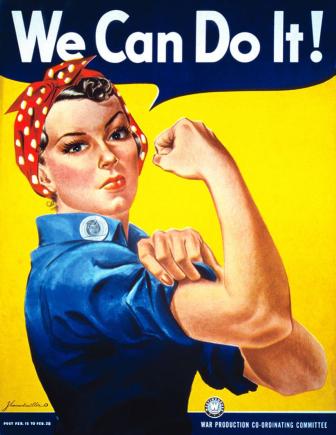
The 1940’s World War II era Rosie the Riveter poster (“We Can Do It)” soon morphed into televised and Internet commercialized portrayals informing us about what we needed for a good life–large houses, expensive (and well-made) cars, extravagant vacations, stainless steel appliances, and more and more shiny things.  Gold was topped by platinum, and “we” turned into “me.”  Soon the shift in emphasis from we to me even became apparent, and evinced itself in our grammatical constructions, as we even today hear educated people proclaim, “Me and Joe went…” (me first) instead of “Joe and I went…” (letting others go first).

OK… You get the message.

So where do we go from here?  Can we get back to the collaboration of “we” and “us“?   As we Boomers retire and check off items on our relentlessly nagging “bucket lists,” maybe we will take time to employ our skills to help solve some social issues such as closing the achievement gap, investing in green technologies, or broadening the awareness of the Millennials, Generations X, Y, and Z on things that really matter… How do we get back to “we” and “us“?

After all, the world has not seen anything like us before, and we have been known to make substantive changes!

How Do We Help The Millennial Generation Develop a Sense of Purpose?

Refined from August 6, 2009, President’s Blog

Every year this time, faculty and staff at colleges and universities around the nation are greeting new and returning students for the academic year. For many of us in academia, there is anticipation and a personal sense of renewal with each new class of students.

During the summer months, faculty refresh courses materials, construct course packs, and design their instruction and assessment to respond to the intellectual and emotional needs of this new cohort of students.  Also, during the summer, the admissions and financial aid professionals have been busy answering telephones to help families manage transitions into the higher learning communities of colleges and universities. Other middle and senior managers also have been busy refining policies and procedures that will guide the campus community through the upcoming academic year.

As I participated in, and observed, these various preparation activities, I realized that one of our challenges is to determine how we can contribute to the development of a sense of purpose in our new and returning students. This sense of purpose will, hopefully, be ignited by the general education curriculum and, appropriately, expanded and enhanced by an academic major and interactions with faculty and mentors.

On the surface, many students will attest that they come to college to pursue specific careers, or to increase their earning potential over their lifetimes. However, if we delve beyond their veneers, we discover that many students come to college searching for a future, searching for their passions, and searching for something that is bigger … something that they can commit their talents and affinities to – a sense of purpose. English novelist Mary Wollstonecraft Shelly (1797-1851), the author of the famous Gothic novel, Frankenstein, is quoted as stating, “Nothing contributes so much to tranquilizing the mind, as a steady purpose – a point on which the soul may fix its intellectual eye.”

As I reflect, it seems that it is the intellectual and spiritual realization of a compelling sense of purpose that is the ultimate goal of higher education—possibly it is the ultimate goal of the human existence. If we succeed in our colleges and universities, our students will leave with a vision and sense of purpose that is bigger than the acquisition of material possessions or gaining a high-paying first job. Possibly, the sense of purpose they gain at our educational institutions will result in their being a better neighbor, in developing a more enlightened view of the interconnectedness of all humans, and in participating more aggressively in sustaining the environment for future generations.

For those who want to measure the value of colleges and universities, how to you measure this outcome, “a point on which the soul may fix its intellectual eye”?

Maybe this emotional, intellectual, and spiritual transformation of members of our society is really the quintessential purpose of college–of quality education.

I hope that all of us, who guide the education of college students will also move forth with a steady sense of purpose.

Let Us Hear It For Southern Ladies: The Steel Magnolias Have Left Their Mark

Reprint from President’s Blog – September 2013

Let us hear it for the Southern Ladies—Steel Magnolias have left their Mark

When I was growing up in Chicago in the 50’s and 60’s, sometimes a friend or a teacher would indicate that I had a southern accent. Now the intonation that usually accompanied this marvelous observation conveyed to me quickly that I needed to work post haste to disguise my southern accent and to learn to talk “right,” so as not to give-away the fact that my mother was from New Orleans and my dad from Gonzalez, LA. However, I must state that my Southern mother was a registered nurse, seamstress, devoted family person, great mom, and avid church-goer. She supported her three children through college, and in her later life, helped her grown children purchase their dream homes. So, just what was I supposed to be ashamed of?

Over the years, there have been a comment or two about my accent, and I realized that living in North Carolina for over 15 years probably refreshed this accent a bit. However, for the record, southern ladies have taught this nation a thing or two.

One of the first southern ladies that I admired on stage was the incomparable and legendary Pearl Bailey. Ms. Bailey could take any play, or part in the play, to another level, like the Tony she won for playing Dolly in Hello Dolly. I remember how proud I felt when I was able to purchase expensive orchestra tickets to see Pearl Bailey perform for everyone in my family. I earned the money working two jobs. Sitting there, so close, watching Ms. Pearl Bailey performing on stage was one of those special moments in a young woman’s life; it was so easy to be entertained by her style of humor and engaging warmth. Later I learned that Ms. Pearl earned a degree in theology from Georgetown University at age 67, and she wrote several books. Ms. Bailey also received the Presidential Medal of Freedom from President Reagan, and she is buried not too far from Cheyney University in West Chester, PA.

Because I loved to read when I was growing up, I was exposed to some southern women through their writings. Some of these women include Flannery O’Conner, who grew up in Georgia and shared the same religion as I. Her short story “A Good Man is Hard to Find,” comes to mind sometimes when watching the “if it bleeds, it leads” news. Southern writer Carson McCullers, in Member of the Wedding, provoked a great deal of thought about coming to grips with one’s identity and relationships. Additionally, it was through reading that I learned about the lives of other extraordinary women of the south such as Rosa Parks, Coretta Scott King, and Dr. Maya Angelou—a Keystone Honors speaker. Each of these southern women helped to awaken the conscience of a nation through defining moments. The works of Alice Walker, Nikki Giovanni, and Sonia Sanchez helped guide the next generations—all these women have spoken at Cheyney University. Recently, I completed Isabel Wilkerson’s research-based, epic book, The Warmth of Other Suns, which followed and connected families of the Great Migration to our current reality. Ms. Wilkerson has won numerous awards, including the Pulitzer Prize.

Since coming to Cheyney University, I have become inspired by, humbled by, and guided spiritually by an unsung heroine and southern woman, Fannie Jackson Coppin. Ms. Fannie Jackson Coppin was born into slavery in Washington, DC, in 1837, the same year that the Institute for Colored Youth (later Cheyney University) was founded by Richard Humphreys and supported, for 176 years, by the Religious Society of Friends (Quakers). My husband found a copy of Ms. Coppin’s autobiographical book, Reminiscences of School Life, which was published after her death in 1913, and gave the book to me for a Christmas gift—how I treasure that book. Fannie Jackson Coppin graduated from Oberlin College in Ohio and became the first African American principal in America at the Institute for Colored Youth known for its extraordinary success in teaching classical education, teacher training, and industrial education to persons of African descent. After serving the Institute for 36 years, Fannie Jackson Coppin accompanied her AME Bishop husband, at age 65, to Africa on missionary work. Coppin State University is named after this southern-born servant leader. Cheyney University has her legacy to uphold.

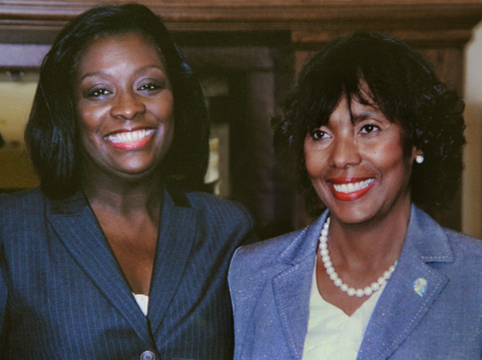
This discussion of southern came up again recently when it was noted that I just hired a North Carolinian woman as Provost- Dr. Phyllis Worthy Dawkins. Oh well, I guess there is no use trying to explain that it was not the part of the country, but it was the education, background, and belief in the mission of Cheyney University—access, opportunity, and excellence. The Cheyney University community also looks forward to engaging in dialogue with another southerner who will be on campus in the spring—Angela Davis.

Hmm, now that I think about it, I am glad to be southern!

The Road Less Traveled

Originally Blogged on May 15, 2014

I smile to myself when I reflect on the many unique, and sometimes painful, journeys that students have related to me over the years. It is extremely gratifying when students persisted and these divergent paths eventually led to transforming college experiences and college degrees.  
 
While  I cheer  those who succeeded, I have to ask—why have not more students chosen similar journeys to develop into critical thinkers, to gain confidence in their learning abilities, and to leave an institution of higher education as more confident and competent individuals ready to take their places as responsible citizens in the Commonwealth and America? Graduating students will not only contribute to the intellectual capital of the region, but they will eventually earn money to help their families, serve as role models, and maybe start a business and employ others.  
 
How can we encourage more young people to take the road less traveled into emerging fields of study in higher education that will respond to the needs of the region and America?
 
With this Blog, I ask that you, too, reflect upon this question with me—how can we muster whatever it takes, the political will, and the infrastructures needed to increase and amplify the intellectual capital in the region?   What can each individual do to maximize the outcomes in human capital that could possibly alter the America we live in and amplify the American dream for many?
 
Dr. Randal Pinkett, an extremely well-educated scholar who is viewed by some as one of the elite intellectuals of this century, and I discussed this briefly before Cheyney University’s 2014 Commencement.  We were both concerned that there appears to be a broadening economic and social gap that could be tearing at the social fabric (education, wealth, health, quality of life, and overall well-being) of our society. We believe that we (Americans) will each have to redouble our efforts to help young people see possibilities, believe in themselves, and gain the courage to venture forth.
 
As Dr. Randal Pinkett so aptly employed as a metaphor in his inspirational 2014 Commencement speech, it seems appropriate to end this Blog with the quote from Robert Frost’s poem, The Road Not Taken:
 
I shall be telling this with a sigh
Somewhere ages and ages hence: 
Two roads diverged in a wood, and I,
I took the one less traveled by,
And that has made all the difference.